







Unity Catalog in 2026: Governance for AI & Analytics Together
Introduction: Governance Is No Longer Optional
As data platforms evolve in 2026, governance has moved from a compliance checkbox to a business enabler. With AI models, real-time analytics, and multi-cloud data ecosystems becoming standard, organizations can no longer afford fragmented security and inconsistent data controls.
This is exactly where Unity Catalog stands out.
Unity Catalog has evolved into the single governance layer for both AI and analytics, enabling enterprises to scale innovation without losing control.
The 2026 Data Reality: AI + Analytics Everywhere
Today, data is consumed by far more than BI dashboards.
In fact, organizations now rely on data for:
- Machine learning model training
- Real-time AI inference
- Embedded analytics in applications
- Data sharing across teams and partners
However, this growth introduces a serious challenge:
How do you govern the same data across analytics, AI, and multiple clouds—consistently and securely?
Unity Catalog answers that question.
What Is Unity Catalog (and Why It Matters More in 2026)
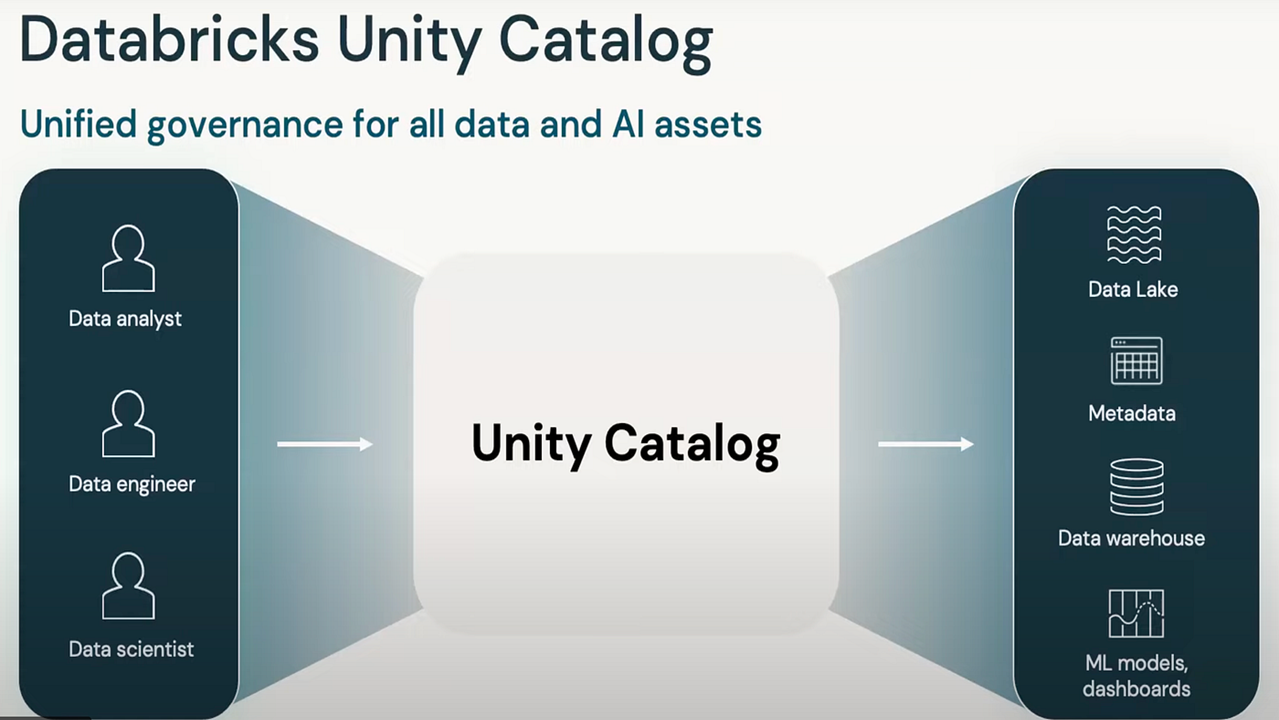
Unity Catalog is Databricks’ unified governance solution that provides centralized control over data, AI assets, and metadata.
Unlike traditional governance tools, Unity Catalog governs:
- Structured and unstructured data
- Machine learning models
- Features used in AI pipelines
- Dashboards, notebooks, and files
As a result, governance is no longer siloed—it’s unified.
Unified Governance for Analytics and AI
One of the biggest shifts in 2026 is the convergence of analytics and AI governance.
With Unity Catalog, organizations can:
- Apply consistent access policies across BI and ML workloads
- Control who can train, deploy, or consume AI models
- Track data usage across analytics, notebooks, and AI pipelines
Consequently, AI innovation becomes safer, faster, and more auditable.
Fine-Grained Security at Scale
Security in 2026 must be precise—not restrictive.
Unity Catalog enables:
- Row-level and column-level security
- Attribute-based access control (ABAC)
- Centralized identity and permission management
Therefore, sensitive data stays protected, while teams continue to move fast.
Built for Multi-Cloud and Open Architectures
Modern enterprises rarely operate on a single cloud.
Unity Catalog supports:
- AWS, Azure, and Google Cloud
- Open data formats like Delta Lake
- Cross-workspace governance
This means governance follows the data—not the platform.
Lineage, Auditing, and Compliance Made Simple
In regulated industries, visibility is everything.
Unity Catalog provides:
- End-to-end data lineage
- Built-in audit logs
- Clear visibility into how data feeds dashboards and AI models
As a result, compliance reporting becomes faster and far less painful.
Why Unity Catalog Is Critical for AI Readiness
AI models are only as good as the data behind them.
With Unity Catalog, organizations gain:
- Trusted datasets for AI training
- Governed feature access
- Full traceability from data to model to business outcome
Thus, AI initiatives move from experimental to enterprise-ready.
Unity Catalog as a Business Enabler
In 2026, governance is no longer about saying “no.”
Instead, Unity Catalog enables:
- Faster analytics delivery
- Safer AI deployments
- Consistent metrics across teams
- Reduced operational risk
In short, it empowers innovation with confidence.
Final Thoughts: One Governance Layer for the Future
As AI and analytics continue to merge, fragmented governance models simply won’t survive.
Unity Catalog represents the future of data governance—one platform, one policy model, and one source of truth for analytics and AI.
Organizations that adopt it early will not only stay compliant but also move faster, scale smarter, and innovate with trust.
